 Needles and plateaus
Guides
Language
EnglishCurrency
US dollar · $GetYourGuide uses the currency you choose.
Guide · Dolomites vs Alps
Dolomites vs Alps: what really sets them apart
Dolomites vs Alps is a slightly false contest, because the Dolomites belong to the Alps. Yet they look, feel and walk differently from almost anywhere else in the range, and the reasons are in the rock.
Check availabilityfrom $35 · cancel without a fee
Editorial team, hikingdolomitesitaly.comUpdated October 25, 20266 min read45 sources
The short version
- 01Same range
- The Dolomites lie within the Alps, in north-east Italy.1
- 02Alps overall
- A range spanning eight countries, from France to Slovenia.2
- 03Dolomites
- Nine groups, 142,000 hectares of World Heritage.1
- 04The look
- Vertical, pale peaks in sculptural shapes.3
- 05Highest top
- Punta Penìa on the Marmolada, 3,343 m.4
Are the Dolomites part of the Italian Alps?
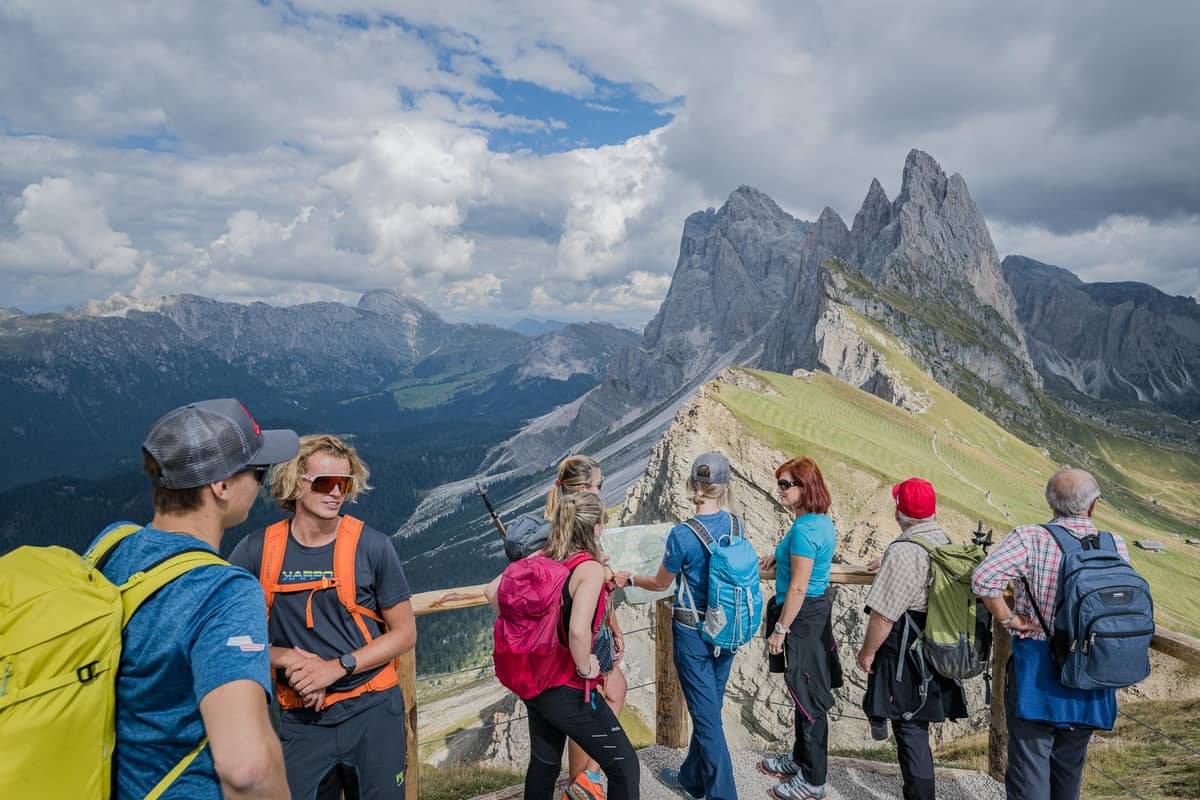
Yes. The Dolomites are a part of the Alps, not a separate range. The UNESCO Dolomites Foundation describes its nine mountain groups as an archipelago scattered across a far greater alpine area, and from the Seceda summit in Val Gardena the view reaches from the Ortles to the Grossglockner in Austria.15 So the useful comparison is between the Dolomites and the other parts of the Alps.
The Alps as a whole are enormous. The Alpine Convention describes a range spanning eight countries, Austria, France, Germany, Italy, Liechtenstein, Monaco, Slovenia and Switzerland, and about 14.8 million people live in it.26 It is home to 30,000 animal species and 13,000 plant species.7 The Dolomites are one corner of that, entirely in Italy.
Within Italy they spread over several provinces. The World Heritage nomination came from the Provinces of Belluno, Pordenone and Udine, the autonomous provinces of Bolzano and Trento, and the regions of Friuli Venezia Giulia and Veneto.8 That is why you hear German and Ladin in Val Gardena and Italian in Molveno: the Dolomites cross language borders as well as valleys.
The difference you see first: pale towers
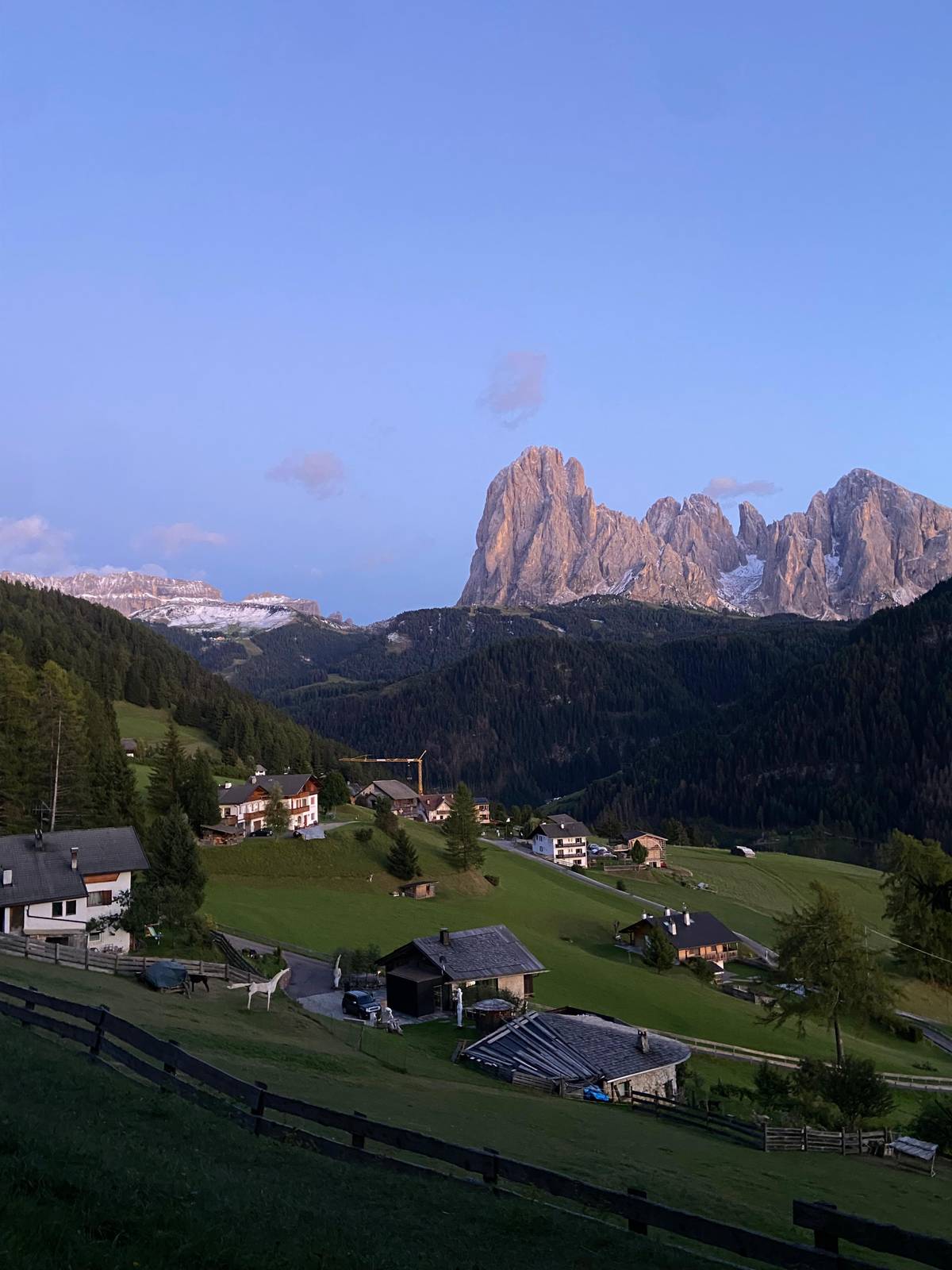
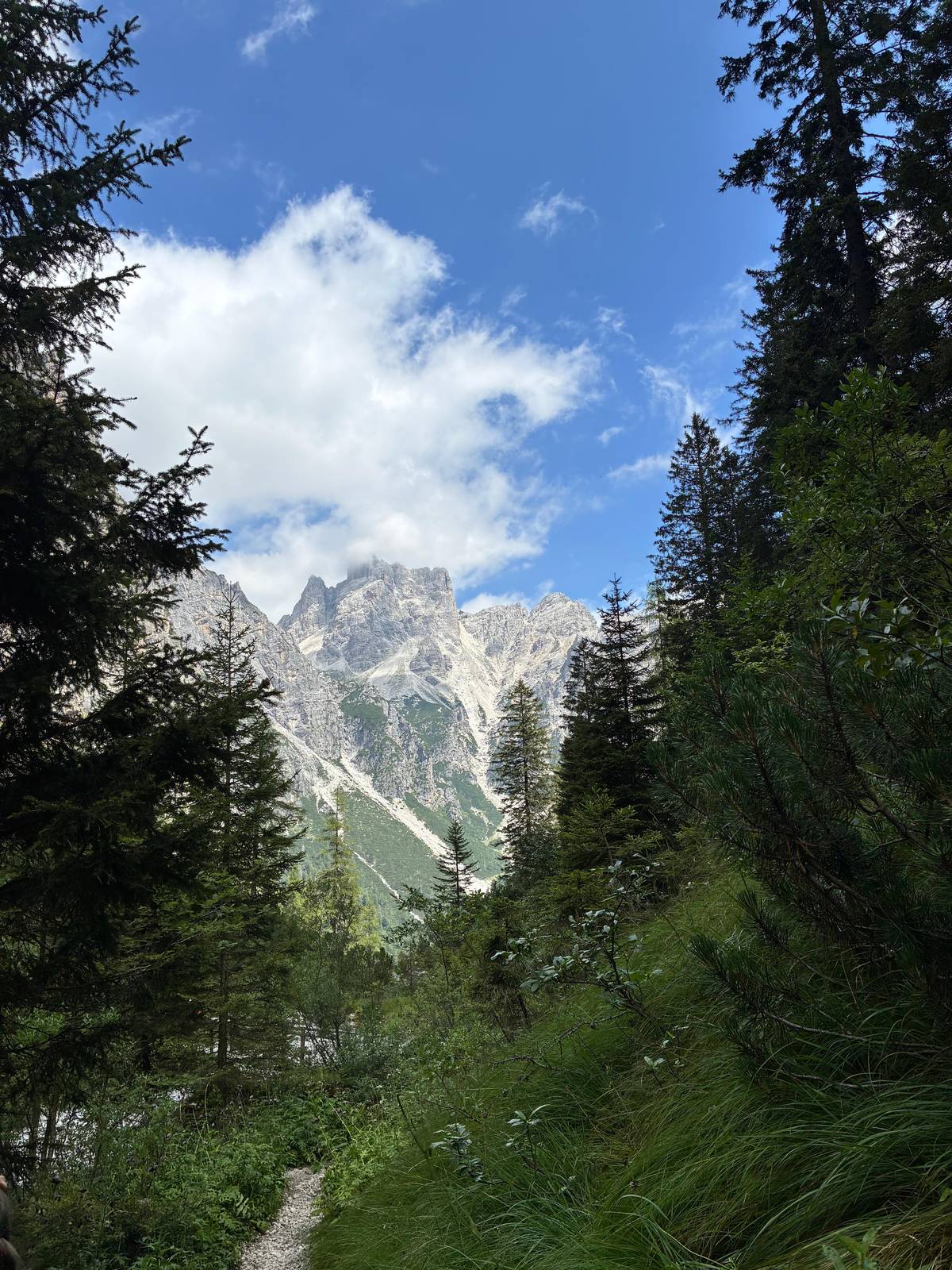
Ask what makes the Dolomites different and the first answer is visual. The UNESCO statement of value describes dramatic vertical and pale coloured peaks in a variety of distinctive sculptural forms, and calls them extraordinary in a global context.3 Seen from a trail, they stand up from green meadows as separate towers, walls and needles rather than one continuous wall.
The names say the same. Odle, the Ladin name of the peaks above Val Gardena, means needles.9 In the Brenta group the rock is carved into jagged spires and pinnacles, unlike the more fluid lines of the other Dolomite groups.10 Even inside the Dolomites the shapes change from group to group: the Puez-Odle group covers 7,930 hectares above Val Gardena, the Brenta 11,135 hectares with the slim Campanil Basso among its peaks.111213
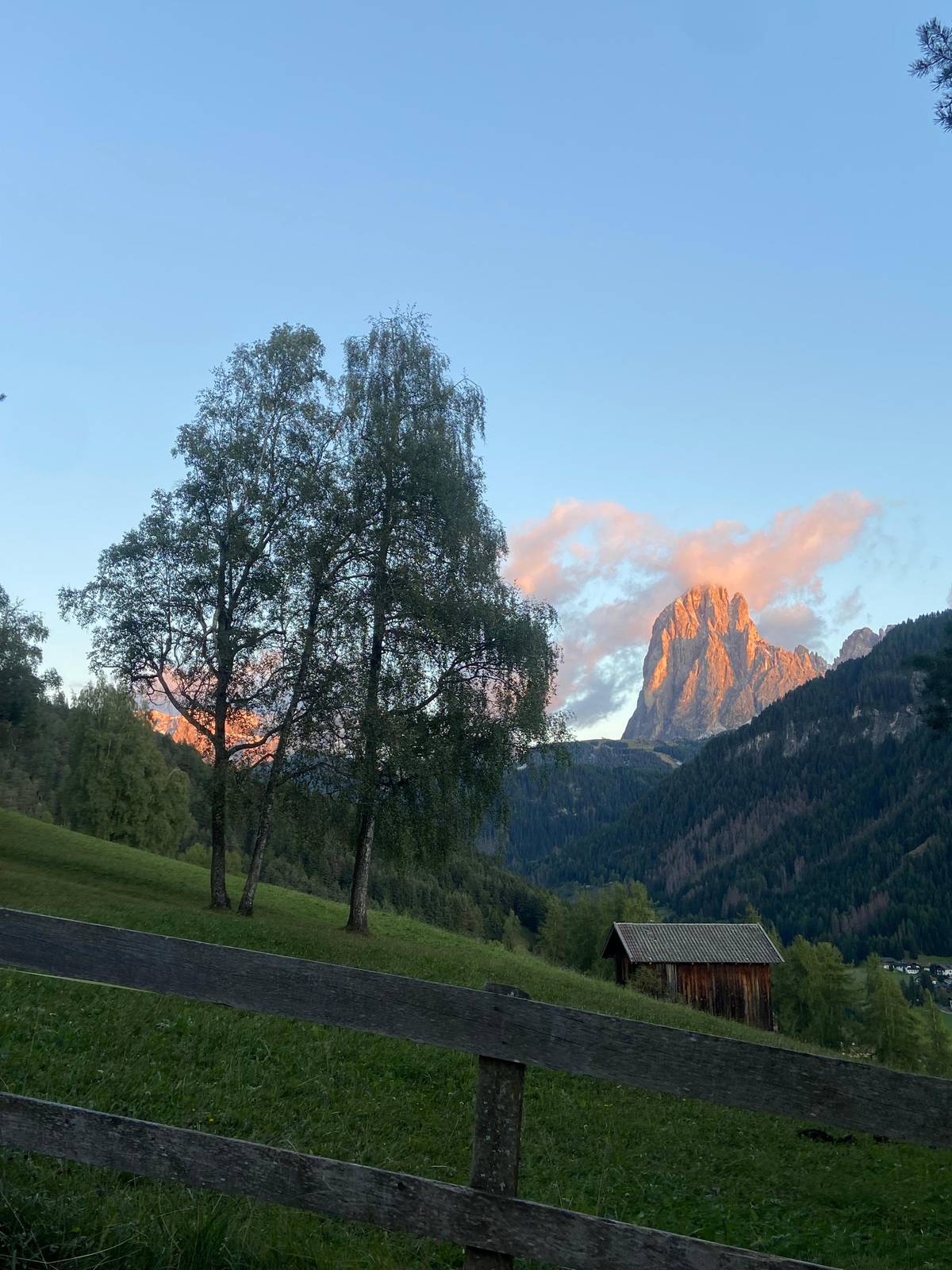
Then there is the color. At sunrise and sunset the pale rock catches the low light and turns pink and orange, the glow that the legend of King Laurin explains as his rose garden blooming.14 Stay in a valley overnight at least once to see it: it happens above the villages, when day visitors have left.
Side by side
The Dolomites against the Alps as a whole
| Aspect | The Alps | The Dolomites |
|---|---|---|
| Countries | Eight | Italy only28 |
| Shape | One range across Europe | Nine separate groups21 |
| Rock | Varied | Pale, vertical limestone320 |
| People | 14.8 million inhabitants | Ladin, German and Italian spoken621 |
| Wildlife | 30,000 animal species | Brown bears in the Brenta722 |
| Highest top | Not compared here | Punta Penìa, 3,343 m4 |
Alps figures from the Alpine Convention, Dolomites figures from the UNESCO Dolomites Foundation.214
Dolomite groups compared
Different groups, different characters
Decision helper
Dolomites or elsewhere in the Alps?
Decide by what you most want to see
The Dolomites
UNESCO calls the pale vertical peaks extraordinary worldwide.3
Look beyond the Dolomites
Here the biggest glacier is on the Marmolada's north face.25
The Dolomites
Routes like the Bocchette Centrali cross the whole Brenta.26
Puez-Odle or Seceda
About 200 million years of rock layers on show.27
Their dramatic vertical and pale coloured peaks in a variety of distinctive sculptural forms is extraordinary in a global context.
The difference underneath: a fossil sea
The shapes come from the rock. UNESCO recognised the Dolomites under two natural criteria: natural beauty, and the record of earth history.28 Their quantity and concentration of highly varied limestone formations is called extraordinary worldwide, and the exposed rock shows how marine life recovered in the Triassic after the greatest extinction event recorded in the history of life on Earth.2029
You can see that history from the trail. In the Puez-Odle park the whole sequence of rock layers from the Permian to the Cretaceous, about 200 million years, can be traced with little deformation.27 On Seceda, fossil remains of an ichthyosaur found in 1968 on the north slope are among the oldest of their kind, and that marine reptile lived around 241 million years ago.3031
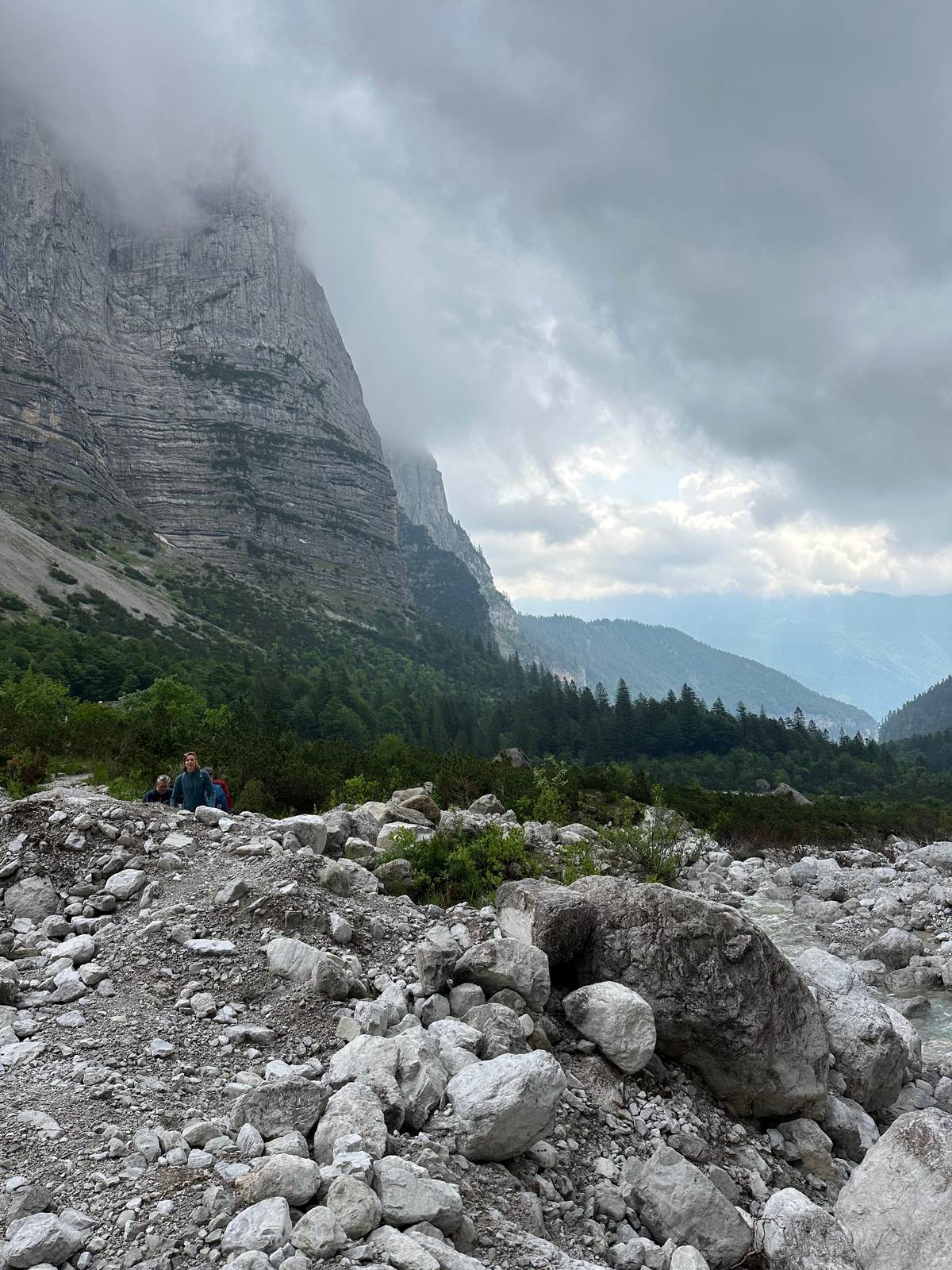
In practical terms, this means you walk on a lot of limestone: scree, slabs and stony paths that grip well when dry and turn slick when wet. It is good walking ground, but it rewards boots with a firm sole and some care on the descents, especially on loose gravel below the walls.
Checklist
Planning a Dolomites trip
01
Choose
- A base valley, not a tour of all
- Lift seasons for your dates
- Days in summer or early autumn
Video
Swiss Alps or Dolomites, which to choose
The video starts loading once you tap play.
Height, glaciers and the high mountains
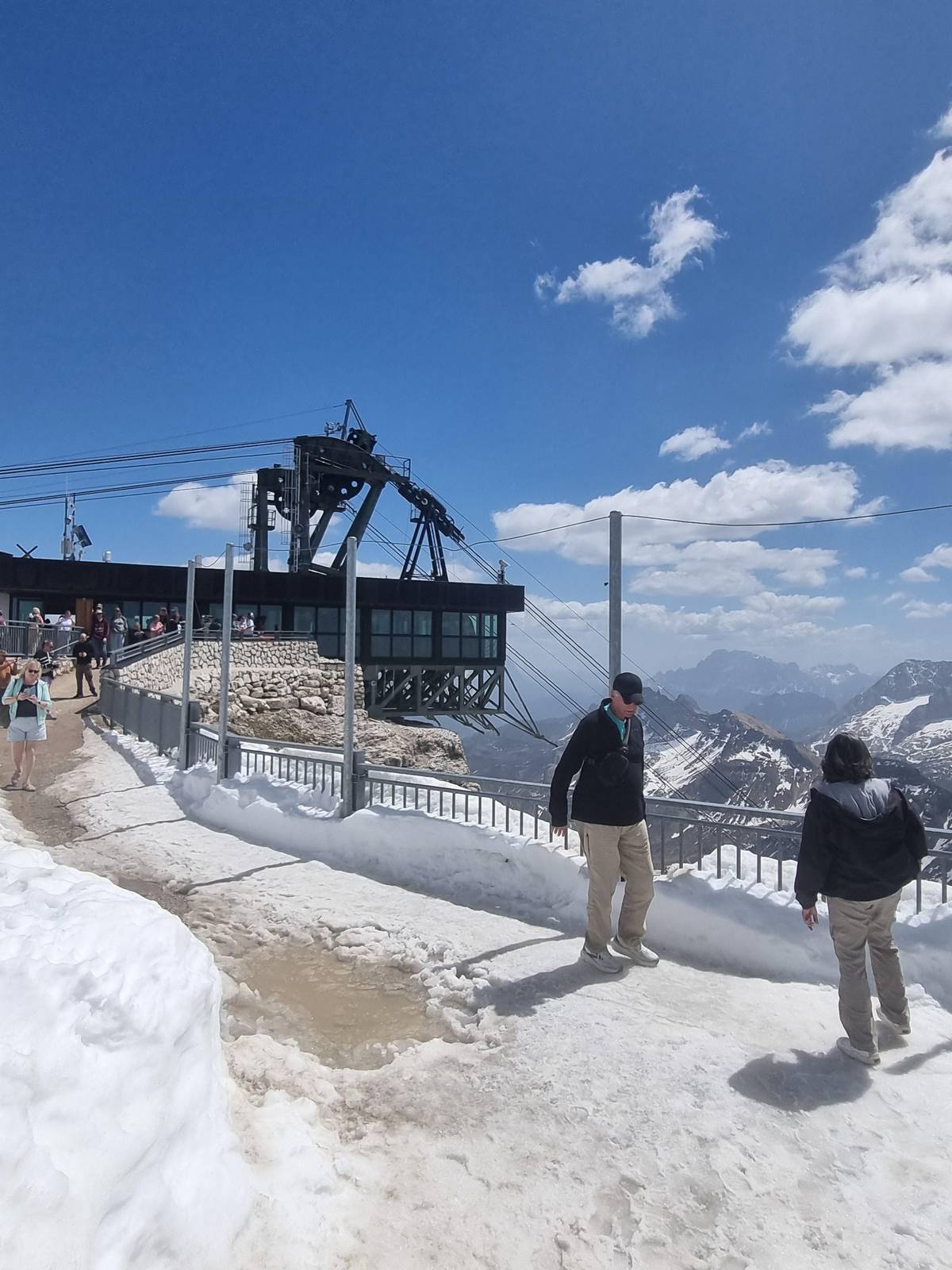
The Dolomites have high summits, but they are not the place for big glaciers. The highest point is Punta Penìa on the Marmolada at 3,343 m, and the Marmolada's north face holds the most extensive glacier in the Dolomites.425 Elsewhere, most walking happens on rock and grass rather than on ice.
For hikers that is mostly good news. The classic Dolomite walks follow crests, passes and plateaus: the Seceda crest at 2,519 m, the Puez hut at 2,475 m, the Forcella de Mesdì at 2,597 m.181719 You get big views without crampons, and many of them start at a lift station.
The vertical walls are where the Dolomites turn technical. Via ferratas, protected climbing routes with cables, are a big part of the culture here: the Sas Rigais and Nives routes above Val Gardena, and the Bocchette Centrali in the Brenta, graded EEA and taking two or more days.3326 They need a harness, helmet and experience, and are a different sport from hiking.
Huts, lifts and how a hiking day works
Mountain huts exist across the Alps, but in the Dolomites they come thick on the ground. In the Seceda and Col Raiser area alone there are 18 family-run huts and mountain restaurants.34 Above Molveno a chain of refuges leads from the Pradel plateau to the Bocca di Brenta, with Croz dell'Altissimo 1 hour from the lift and Selvata about 40 minutes further.2435
Lifts are part of the walking culture too. In Val Gardena, gondolas and cable cars put you on crests and plateaus in minutes, and they run in fixed seasons; the Seceda cable cars, for example, run from 22 May to 2 November in 2026.36 Outside the season the same walks start in the valley, with all the extra climbing that brings.
The result is a hiking style that suits a wide range of walkers: short crest walks for families, long traverses for strong hikers, and lunch on a terrace in between. It also means you can build a week of very different days around a single valley, without long drives between trailheads.
The difference between the Alps and the Dolomites, in culture
The Dolomite valleys carry their own culture. In Val Gardena three official languages are spoken, Italian, German and Ladin, a Rhaeto-Romance language with over 2,000 years of history spoken by around 45,000 people in the valleys around the Sella massif.21 The signposts show it, with Ladin names like Urtijëi and Secëda beside the Italian ones.
Farming shapes the landscape you walk through. Seceda is the highest alpine pasture in South Tyrol where traditional haymaking is still done, and about 100 farmers and landowners keep small huts there.3738 That is why the local rules ask you to stay on the trails and off the meadows, and why the pastures look so manicured in July.
Protection matters here as much as anywhere in the Alps. The Dolomites were added to the World Heritage List on 26 June 2009, and large parts lie in nature parks such as Puez-Odle and Adamello Brenta, the latter founded in 1967 as one of the first two provincial parks in Italy.3940 Wild camping is banned on Seceda, and drones are not permitted there.4142
So which should you choose?
If you are choosing between a trip to the Dolomites and another part of the Alps, ask what you want to see. If it is pale towers rising straight out of green meadows, huts every hour and short walks with huge views, the Dolomites fit. If glaciers are what you want, know that the Dolomites have few: the largest lies on the Marmolada's north face.25
Within the Dolomites, choose a base. Val Gardena gives you Seceda, the Sassolungo circuit and the Alpe di Siusi; Molveno gives you a lake and the refuge trail into the Brenta, which our guided day walks with a local guide over 6.5 hours, from $35. Both reward several days rather than one.
Whatever you choose, the rules of the mountains are the same everywhere in the Alps: check the local forecast, tell someone your route, go back if in doubt, and call 112 in an emergency.43444532 The Dolomites are kind to walkers, but they are still high mountains.
Your Brenta day
Walk to the refuges under the Brenta walls.
Pick a date, meet at the ticket office, and cancel free if the forecast turns.


You ask,we answer.
Are the Dolomites part of the Italian Alps?
Yes. They are a part of the Alps; the UNESCO foundation describes them as spread across a far greater alpine area.1
What is the highest mountain in the Dolomites?
Punta Penìa on the Marmolada. It reaches 3,343 m, the highest in the Dolomites World Heritage Site.4
Why do the Dolomites look so different?
Pale, vertical limestone. UNESCO describes vertical, pale peaks in sculptural forms and an extraordinary range of limestone formations.320
How many countries do the Alps cross?
Eight. Austria, France, Germany, Italy, Liechtenstein, Monaco, Slovenia and Switzerland, per the Alpine Convention.2
Are there glaciers in the Dolomites?
A few; the largest is on the Marmolada. Its north face holds the most extensive glacier in the Dolomite region.25
When did the Dolomites become UNESCO World Heritage?
On 26 June 2009. They were listed for their landscape and their geological importance.39
Is hiking easier in the Dolomites?
Often more accessible. Many crest walks start at lift stations; the Seceda ridge is about 1 km and an hour.23
Sources
Sources and evidence
- 1UNESCO Dolomites Foundation (Fondazione Dolomiti UNESCO)The nine Systems of the Dolomites↩
- 2Alpine Convention (Permanent Secretariat)The Alpine Convention: who we are↩
- 3UNESCO Dolomites Foundation (Fondazione Dolomiti UNESCO)Outstanding Universal Value↩
- 4UNESCO Dolomites Foundation (Fondazione Dolomiti UNESCO)Marmolada: the 2nd System↩
- 5Seceda AG cableways (Funivie Seceda), OrtiseiSummer: lifts, opening hours and prices↩
- 6Alpine Convention (Permanent Secretariat)The Alpine Convention: who we are↩
- 7Alpine Convention (Permanent Secretariat)The Alpine Convention: who we are↩
- 8UNESCO Dolomites Foundation (Fondazione Dolomiti UNESCO)The Dolomites UNESCO World Heritage Site↩
- 9UNESCO Dolomites Foundation (Fondazione Dolomiti UNESCO)Puez-Odle: the 6th System↩
- 10UNESCO Dolomites Foundation (Fondazione Dolomiti UNESCO)Brenta Dolomites: the 9th System↩
- 11UNESCO Dolomites Foundation (Fondazione Dolomiti UNESCO)Puez-Odle: the 6th System↩
- 12UNESCO Dolomites Foundation (Fondazione Dolomiti UNESCO)Brenta Dolomites: the 9th System↩
- 13UNESCO Dolomites Foundation (Fondazione Dolomiti UNESCO)Brenta Dolomites: the 9th System↩
- 14Dolomites Val Gardena tourism (Val Gardena Marketing)Seceda: tips and rules of conduct↩
- 15Visit Trentino (Trentino Marketing)Selvata mountain hut, Molveno↩
- 16Visit Trentino (Trentino Marketing)Tosa Tommaso Pedrotti mountain hut↩
- 17Dolomites Val Gardena tourism (Val Gardena Marketing)The 7 most beautiful hikes↩
- 18Dolomites Val Gardena tourism (Val Gardena Marketing)Seceda↩
- 19Dolomites Val Gardena tourism (Val Gardena Marketing)The 7 most beautiful hikes↩
- 20UNESCO Dolomites Foundation (Fondazione Dolomiti UNESCO)Outstanding Universal Value↩
- 21Dolomites Val Gardena tourism (Val Gardena Marketing)Seceda: good to know↩
- 22Adamello Brenta Natural Park (Parco Naturale Adamello Brenta)Coesistere con l'orso (living with the bear)↩
- 23Dolomites Val Gardena tourism (Val Gardena Marketing)Seceda Ridge Line↩
- 24Visit Trentino (Trentino Marketing)Croz dell'Altissimo mountain hut, Molveno↩
- 25UNESCO Dolomites Foundation (Fondazione Dolomiti UNESCO)Marmolada: the 2nd System↩
- 26Visit Trentino (Trentino Marketing)Tosa Tommaso Pedrotti mountain hut↩
- 27UNESCO Dolomites Foundation (Fondazione Dolomiti UNESCO)Puez-Odle: the 6th System↩
- 28UNESCO Dolomites Foundation (Fondazione Dolomiti UNESCO)Outstanding Universal Value↩
- 29UNESCO Dolomites Foundation (Fondazione Dolomiti UNESCO)Outstanding Universal Value↩
- 30Dolomites Val Gardena tourism (Val Gardena Marketing)Seceda: good to know↩
- 31Dolomites Val Gardena tourism (Val Gardena Marketing)Seceda: good to know↩
- 32Visit Trentino (Trentino Marketing)What to do during a mountain hike (10 rules)↩
- 33Dolomites Val Gardena tourism (Val Gardena Marketing)Activities on Seceda↩
- 34Dolomites Val Gardena tourism (Val Gardena Marketing)Activities on Seceda↩
- 35Visit Trentino (Trentino Marketing)Croz dell'Altissimo mountain hut, Molveno↩
- 36Seceda AG cableways (Funivie Seceda), OrtiseiSummer: lifts, opening hours and prices↩
- 37Dolomites Val Gardena tourism (Val Gardena Marketing)Seceda: tips and rules of conduct↩
- 38Dolomites Val Gardena tourism (Val Gardena Marketing)Seceda: tips and rules of conduct↩
- 39UNESCO Dolomites Foundation (Fondazione Dolomiti UNESCO)The Dolomites UNESCO World Heritage Site↩
- 40Adamello Brenta Natural Park (Parco Naturale Adamello Brenta)Storia (history of the park)↩
- 41Dolomites Val Gardena tourism (Val Gardena Marketing)Seceda: tips and rules of conduct↩
- 42Dolomites Val Gardena tourism (Val Gardena Marketing)Seceda: tips and rules of conduct↩
- 43Visit Trentino (Trentino Marketing)What to do during a mountain hike (10 rules)↩
- 44Visit Trentino (Trentino Marketing)What to do during a mountain hike (10 rules)↩
- 45Visit Trentino (Trentino Marketing)What to do during a mountain hike (10 rules)↩
Keep reading